Omnix Agent
An Omniflex Teleterm RTU cabinet with wired terminal blocks and a lit pilot lamp on an alarm annunciator panel, at a US industrial yard on a cold morning.
Omniflex RTU Commissioning Teleterm M3e · M3R2 · S3G1

Which Teleterm RTU matches your field wiring?

Teleterm M3e, M3R2, and S3G1 cover compact, radio/Ethernet, and cellular telemetry needs. Omnix Agent handles mounting, wiring, I/O setup, and testing from Edina, MN and on site.

Supply

9–30Vdc

I/O per unit

Configurable

Field bus

Modbus RTU

Wiring

RS232 ready

Bay 01

Teleterm M3e for compact sites

Product brief

Model C2363A-0

Best for

Lift stations, meter vaults

Omniflex shows the Teleterm M3e RTU on 9-30Vdc (product brief model C2363A-0) — a remote telemetry unit positioned for remote monitoring with configurable I/O. We use it where cabinet space is tight and the point list is short, such as lift stations and meter vaults.

Wiring stays simple with fused 24V or 12V feeds. Configuration files are saved and left with the site. Expansion stays possible if points grow later.

Omniflex Teleterm M3e RTU mounted on a DIN rail inside a pole-mounted cabinet at a US remote well site.

Config file saved and handed over with the panel

Expansion possible where point count grows as the site changes

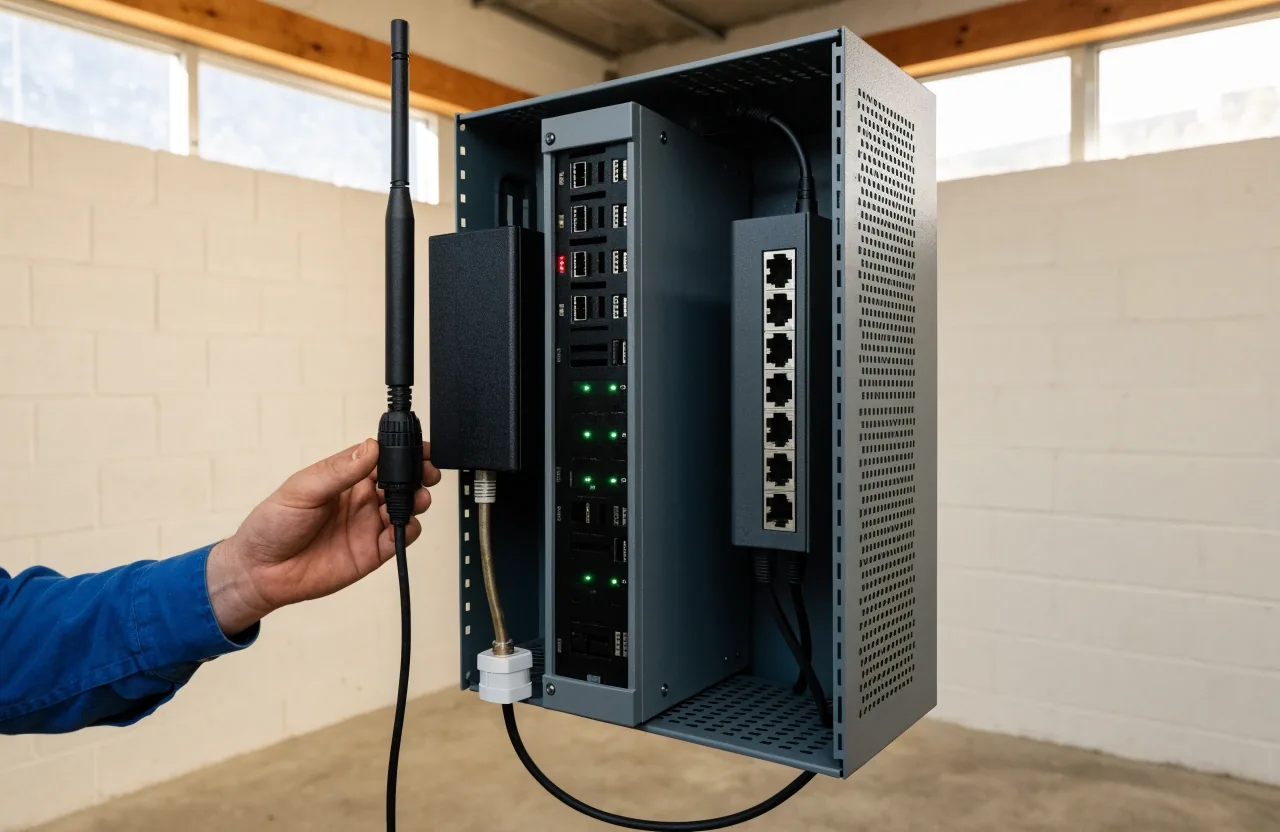
Omniflex Teleterm M3R2 RTU with radio and Ethernet connections in a wall-mounted enclosure at a US pump station.

Bay 02 · radio & Ethernet

Teleterm M3R2 for radio and Ethernet

Omniflex lists the Teleterm M3R2 as model C2363A-32 with an 868 MHz radio, Ethernet support, and 12 configurable I/O. That combination suits distributed sites with a mix of hardwired plant network and outstations beyond cable reach.

We survey signal paths, set addresses, and test retries before handover. Ethernet points are mapped alongside radio points in one I/O list, so your SCADA host sees a single logical station.

Model

C2363A-32

Radio band

868 MHz

I/O

12 configurable

Network

Ethernet

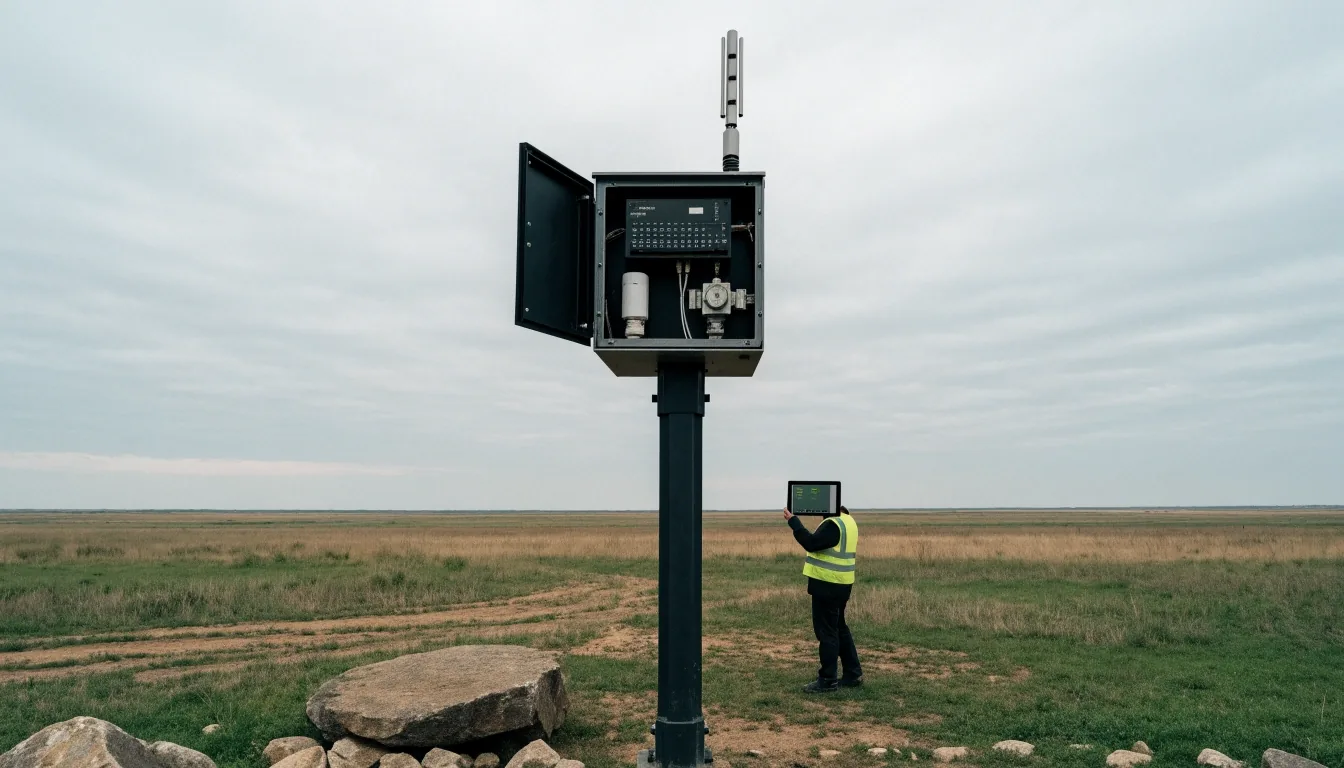
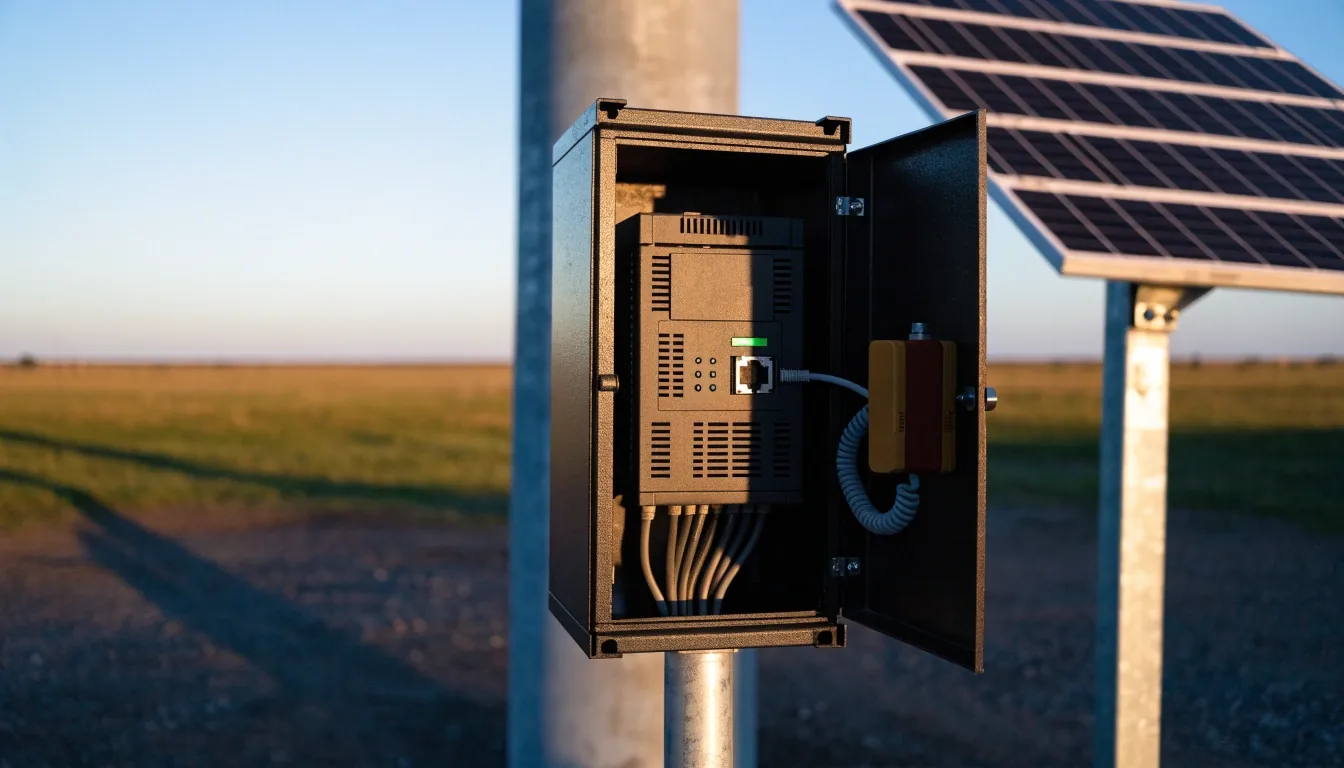
Omniflex Teleterm S3G1 RTU in a weatherproof enclosure with a cellular antenna on a remote US pipeline right-of-way.

Bay 03 · where cables cannot reach

Teleterm S3G1 where cables cannot reach

The Teleterm S3G1 brief appears as model C2380C-11, described as a Teleterm RTU on 9-30Vdc in the current catalog. We specify cellular variants when trenching is impractical or leased lines are unreliable.

Antenna placement, SIM provisioning, and reporting intervals are set during commissioning. Power draw is checked against the local supply, including Powerterm charging equipment where fitted. Reporting is verified over several polling cycles before the job closes.

Brief model

C2380C-11

Wide-area link

Cellular

Supply

9–30Vdc

The commission itself

Configurable I/O, wired for service

Configurable I/O saves cabinet space, but only if labeled clearly. Three things decide whether a technician can trace any wire a year from now: how each channel is assigned, how the panel door chart agrees with the software, and whether spares are parked and tagged for future use.

I/O assignment

Each channel named where it lives

We assign each channel as digital in, digital out, or analog per your sensor list, then mark it on the door chart and in software. Modbus RTU registers are mapped and recorded. Spare channels are parked and tagged for future use.

Power done right

Field power decides reliability as much as comms

The Powerterm PTC PSU/Chgr (product C2194A) with AC input version is rated 12/24V at 0.66A and supports Teleterm-compatible installs. We measure inrush, confirm grounding, and check charger behavior on mains loss. Fuses and breakers are sized and labeled. The panel gets a one-line power sketch taped inside the door.

Testing before we leave

Every point forced from the field end

Every RTU point is forced or stimulated from the field end, not just from software. We confirm alarm, return-to-normal, and communication-loss behavior. SCADA receives each mapped point during the same visit. Deficiencies are fixed on the spot or listed with owners and dates. You sign off on a tested I/O sheet.

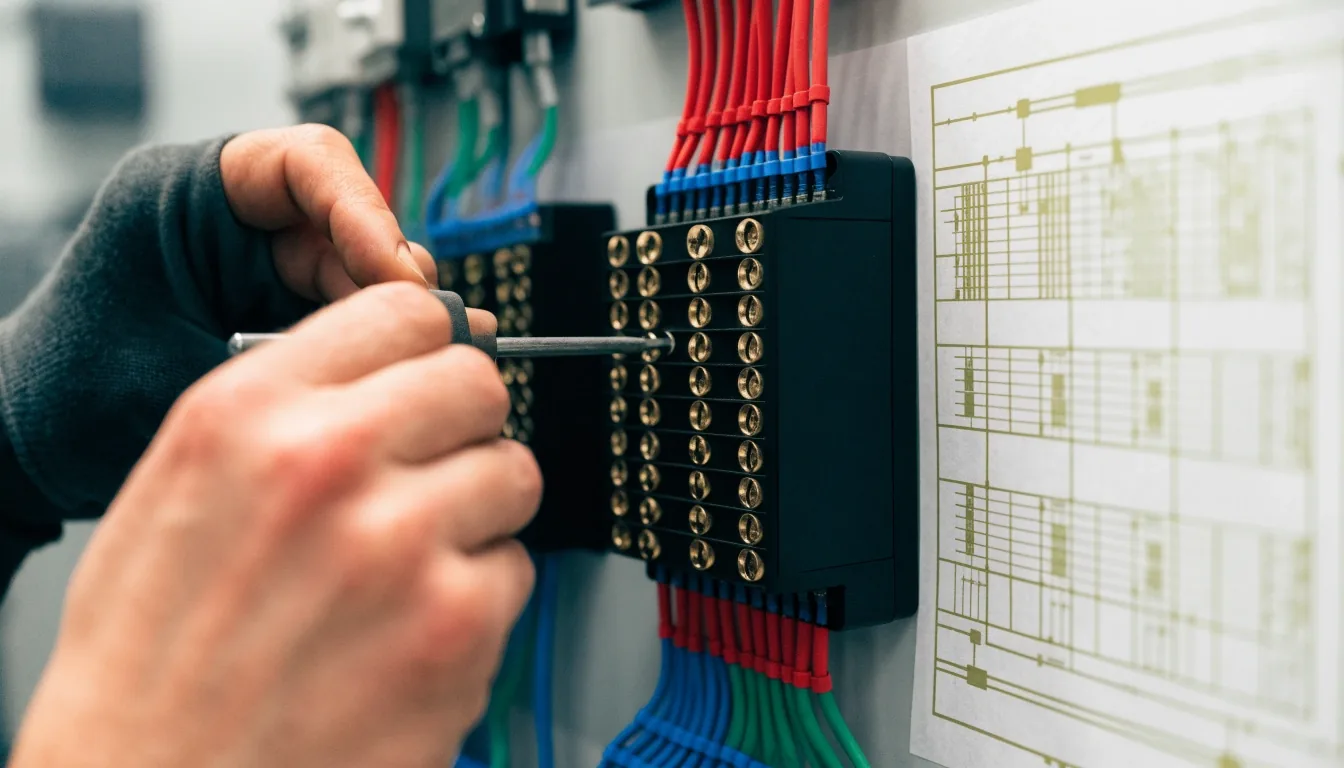
Close-up of color-coded wires landed on an Omniflex Teleterm RTU's I/O terminals inside a US water treatment plant.

Wiring, labeled for the next visit

The door chart is part of the job

A technician opening the door a year later can trace any wire in minutes. That is not decoration — it is what keeps a Modbus RTU field wiring fault from turning into a callout that costs a full day. Every wire we land gets a label at both ends, and every terminal change we make is written back to the door chart and to the software mapping.

Downstream of the RTU

Where the RTU hands its alarms

A Teleterm RTU usually sits beside an alarm annunciator panel that carries the plant's own alarm names — the Omni16C in many of the yards we commission. The RTU reads that panel's status contacts and forwards them; the annunciator keeps the local indication a control room operator relies on when the network is down. Omnix Agent wires and tests both sides together so the alarm state a technician sees on the panel matches what the alarm annunciator panel reports upstream.

Related chapter

Alarm Annunciator Panels

How Omni16C alarm annunciator panels are wired, labeled, and tested at the panel faceplate, with the alarm states mapped alongside the RTU.

Read the annunciator chapter

Bench checks before the site

Functional test, not a paperwork exercise

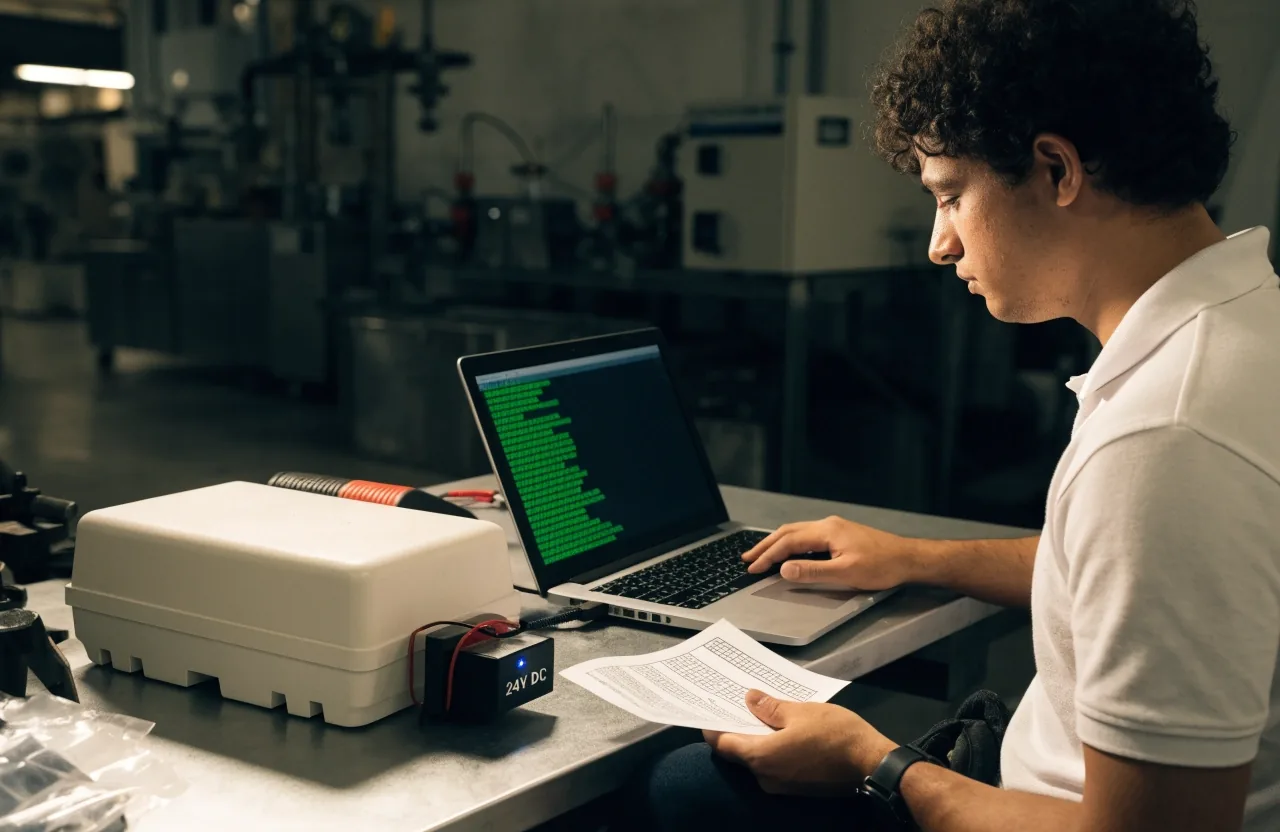
Before we carry a unit to a site, it is powered up on a bench against the same 24V supply we expect to see in the cabinet. The I/O list is walked point by point, and the serial link is exercised against a terminal session so we catch a wrong register map or a bad combo before the trip.

Onsite the same steps repeat with the real field wiring. The bench run compresses the on-site window; the on-site run is what the site actually gets signed off.

Commissioning engineer testing an Omniflex Teleterm RTU on a bench with a 24V supply, laptop, and multimeter.
An arched daylight window at the end of an industrial instrument-yard corridor with a steel rack bay in silhouette.

Support after the commission

What stays with the site when we leave

A completed commission leaves four things behind: the configuration files for every unit, a signed I/O sheet, a labeled door chart with the one-line power sketch taped inside, and a mapping of Modbus RTU registers that matches what your SCADA host is polling. If an RTU needs a change a year from now, we work from those documents rather than from memory.

Questions we get on the phone

Radio, Ethernet, cellular — or all three?

Omnix Agent, 4820 W 77th St, Edina, MN 55435

Monday to Friday, 9:00 AM – 6:00 PM

When should we use radio, Ethernet, or cellular?

Use Ethernet where cable exists and is maintainable, radio where sites have line-of-sight and you own the path, and cellular where cable is weak or unavailable. We confirm with a site survey and signal check. Many projects mix all three — the M3R2 runs the plant-network and outstation mix in one I/O list, and the S3G1 covers the outstations beyond cable reach.

Can limited-power sites run an RTU?

Yes, with planning. The 9-30Vdc Teleterm units suit small DC supplies, and we verify load against charger and battery capacity. We set reporting intervals to match the power budget. The result is documented, not assumed — you know what the site draws and what the supply can hold.

What does a commissioning visit actually include?

Mounting, wiring, I/O setup, and testing. The RTU is mounted and powered, each channel is landed and labeled, Modbus RTU registers are mapped and recorded, and every mapped point is fed from the field end so your SCADA host sees the same value a technician would read at the panel. You sign off on a tested I/O sheet before we leave.

Do you cover sites outside Minnesota?

Yes — Omnix Agent works across US industrial facilities, and the Omni16C and Teleterm work is the same whether the site is a lift station in Minnesota or a pipeline right-of-way in another state. Travel is scoped on the RTU review, and the address above is where the panels are prepped and the documentation is filed.
Next step

Bring us the point list and the panel photo

An RTU review is a conversation, not a quote form. Send the point list, a photo of the cabinet, and the current SCADA host if there is one. We come back with which Teleterm model fits, the I/O mapping we would target, and what the visit will need on your side — power availability, network access, and a window to test from the field end.